What is cash out in cricket betting, and how to work out what the offer should be
Cash out is an offer to close your bet before the match settles it. The site names a sum; you take it now, and whatever happens next no longer affects you. It can be the right move. It is almost never a free one, and you can work out its cost yourself in under a minute.
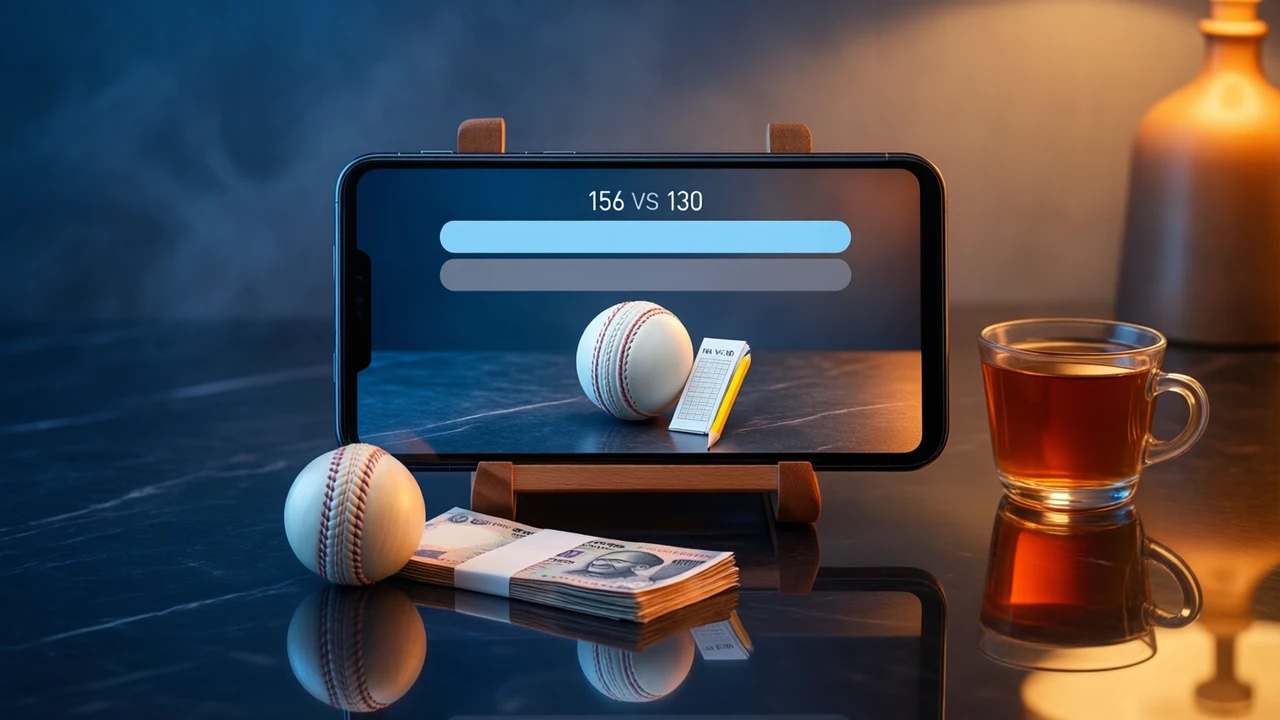
Mid-match, two prices on screen
What the button does
When you cash out, the site closes your position at today's price. Behind the button is the same move you could make yourself: an opposite bet sized so that you end up with the same money whichever way the match goes. The back and lay page explains the two sides; cash out is simply the site placing the lay for you — and deciding the terms.
Mid-match, two prices on screen
Work out a fair offer
Say you backed a team for ₹100 at 2.50. They bat well, and their price falls to 1.60. What is your bet worth right now?
Step 1 — size the lay. Lay stake = your stake × your price ÷ today's price.
100 × 2.50 ÷ 1.60 = ₹156.25.
Step 2 — find the liability. 156.25 × (1.60 − 1) = ₹93.75.
Step 3 — check both endings.
| match ends | your back | the lay | total |
|---|---|---|---|
| your team wins | +₹150 | −₹93.75 | +₹56.25 |
| your team loses | −₹100 | +₹156.25 | +₹56.25 |
The same ₹56.25 either way. So a fair cash out on this bet returns about ₹156 — your ₹100 back plus ₹56 profit.
Mid-match, two prices on screen
What the button charges
Now compare that with what the screen offers. If the button says ₹130, it is paying ₹26 less than the hedge you just built. That difference is the price of pressing it instead of doing the sum.
Why is the offer lower?
- it is calculated off the lay side of the market, which is always a little worse than the back side you see first;
- it often adds its own margin on top of that;
- it is refreshed in steps, so during a fast over it trails the real price.
None of this is hidden. It just is not printed next to the button.
Mid-match, two prices on screen
When cash out goes the other way
Cash out works on losing bets too. Take the same ₹100 at 2.50, but this time your team collapses and its price drifts to 4.00.
- lay stake: 100 × 2.50 ÷ 4.00 = ₹62.50;
- liability: 62.50 × 3 = ₹187.50;
- team wins: +150 − 187.50 = −₹37.50; team loses: −100 + 62.50 = −₹37.50.
A fair cash out returns ₹62.50 of your ₹100. Taking it locks a ₹37.50 loss instead of risking the whole ₹100. That is the same idea as a loss cut, done by the site rather than by you.
Mid-match, two prices on screen
When the button disappears
The offer is suspended whenever the market is — on a wicket, a boundary, a review. If you were waiting to press it at the moment a wicket fell, you will not get the old number. When the market reopens, the offer is based on the new price.
Some sites also offer a partial cash out: close part of the stake now, leave the rest running. The arithmetic is the same, applied to the part you close.
Mid-match, two prices on screen
Is cash out a good idea?
It is a tool for one situation: you no longer want the position you hold, and today's price is one you accept. It is a poor tool for nerves. If the match has not changed and only your mood has, the button charges you its margin to feel better.
Two habits help:
- do the hedge sum first, then look at the offer — not the other way round;
- if the price has moved on market load rather than on anything in the match, the offer reflects bettors' money, not your team's chances.
FAQ
What is cash out in cricket betting?
An offer from the site to settle your open bet early for a fixed sum, whatever the result turns out to be.
How is the cash out amount calculated?
From today's price. A fair figure is your stake × your price ÷ today's price; the site's offer is usually below that.
Why is my cash out offer so low?
It is priced off the lay side, often with an extra margin, and may lag behind a fast-moving price.
Can I cash out during a wicket?
No. The offer is suspended with the market and returns at a new level once betting reopens.