What is loss cut in cricket betting — fixing a smaller loss when the price turns
Loss cut is the second bet you place when the first one is going wrong. You take the opposite side at today's price, sized so that your result is the same whoever wins. You give up the chance of the first bet coming good, and in return you stop the loss from getting any bigger.

It is not a trick for winning. It is a way of choosing a known loss over an unknown one.
Mid-match, two prices on screen
The formula
If you backed first, you cut by laying the same team:
lay stake = first stake × first price ÷ today's price
If you laid first, you cut by backing, using the same sum the other way round. Everything below uses a back first, because that is how most loss cuts begin. The two sides are explained on the back and lay page.
Mid-match, two prices on screen
A worked loss cut
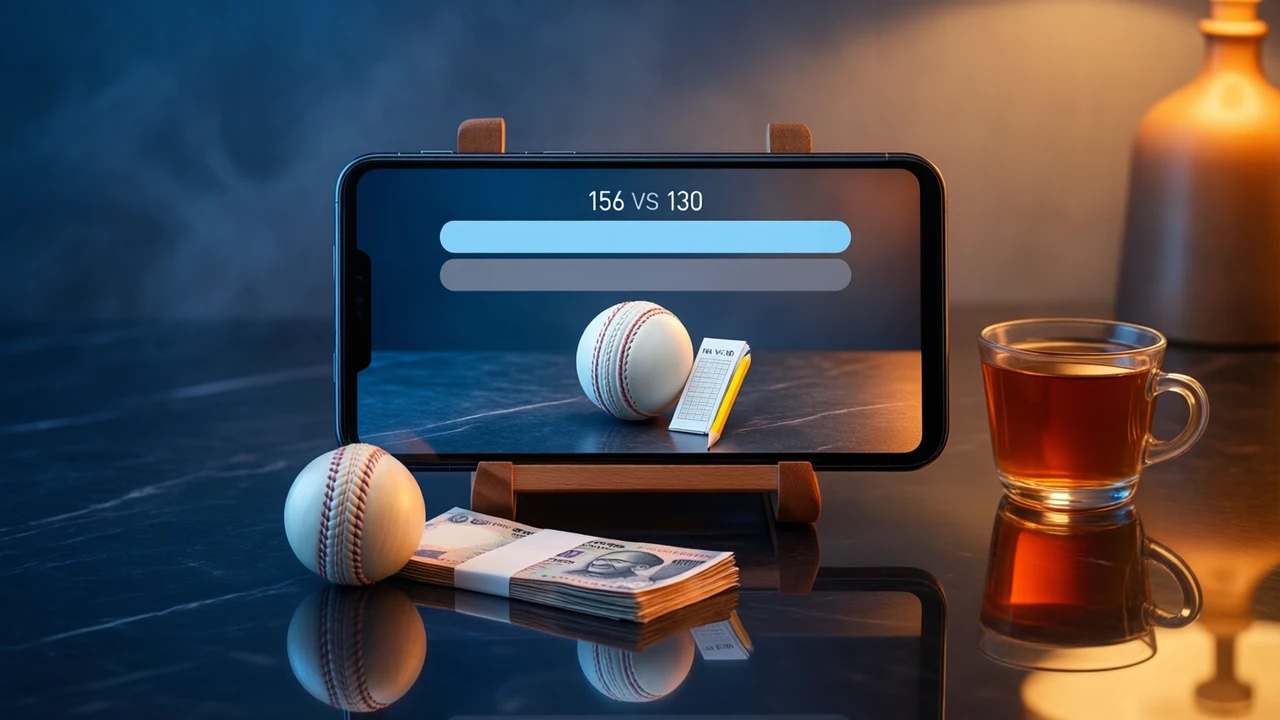
You back a team for ₹1,000 at 1.80 before the match. They lose three early wickets and their price drifts to 3.00.
Size the cut. 1,000 × 1.80 ÷ 3.00 = ₹600 lay stake.
Find its liability. 600 × (3.00 − 1) = ₹1,200.
Check both endings.
| match ends | first bet | the cut | total |
|---|---|---|---|
| your team recovers and wins | +₹800 | −₹1,200 | −₹400 |
| your team loses | −₹1,000 | +₹600 | −₹400 |
Without the cut, you were facing either +₹800 or −₹1,000. With it, you have −₹400 whatever happens.
Mid-match, two prices on screen
What the cut actually cost
The loss did not shrink from ₹1,000 to ₹400 by magic. You traded two possible results for one certain one.
- If the team was going to lose anyway, the cut saved you ₹600.
- If the team was going to recover, the cut cost you ₹1,200 — the gap between +₹800 and −₹400.
Whether that trade is sensible depends entirely on how likely the recovery was. At 3.00 the market was pricing it at about one in three. The cut is worth it only if you think the real chance is lower than the price says.
Mid-match, two prices on screen
When cutting is a bad idea
When the price moved on money, not on cricket. If your team's price drifted without a wicket or a bad over — pure market load — you would be cutting at a price that says more about other bettors than about the match.
When the lay side is wide. You cut on the lay price, which is worse than the back price shown first. In a thin market the gap can eat a large part of what you save.
When you cut, then cut the cut. Laying, then backing again when the price swings back, then laying again, pays the gap between the two prices every time. A long evening of cuts can cost more than the bet you were protecting.
Mid-match, two prices on screen
The same move, the other way: book set
The formula does not care which way the price moved. If your team's price falls after you back it — say from 1.80 to 1.40 — the same sum locks in a profit on both endings instead of a loss. Bettors call that setting the book. It is how a fair cash out is priced.
Mid-match, two prices on screen
Loss cut in a session market
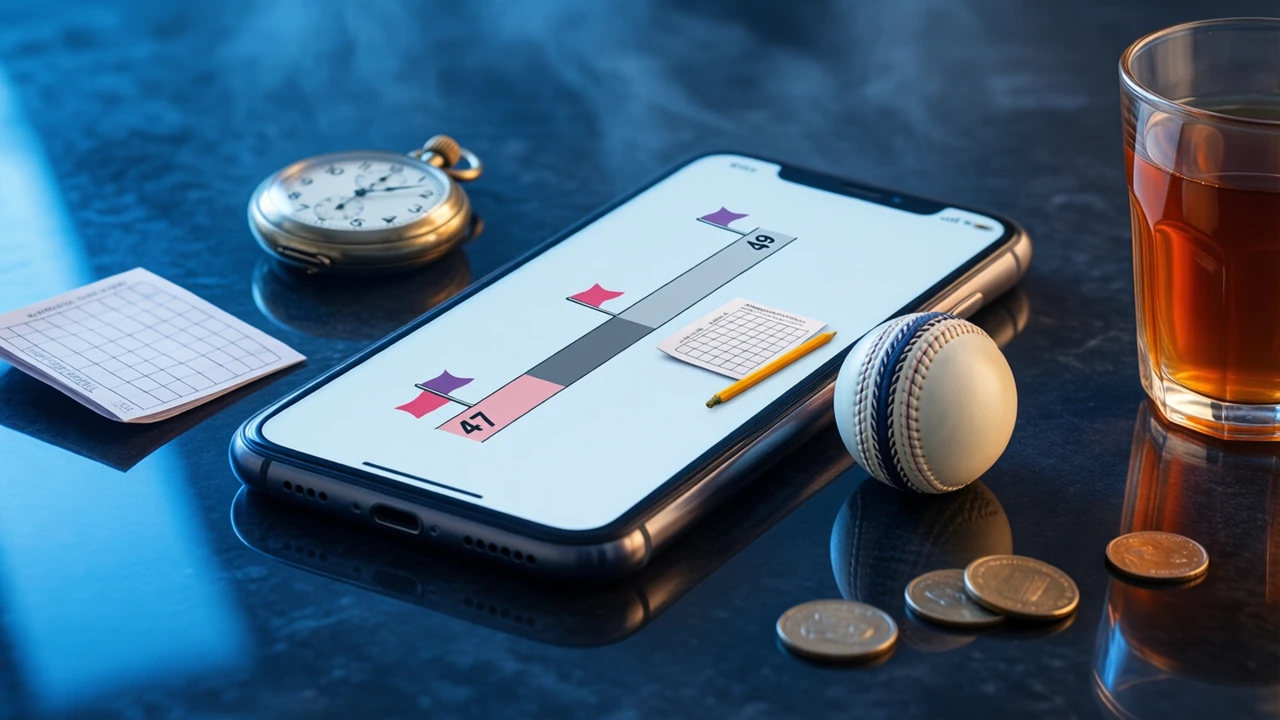
The idea works on session lines too. If you took Yes 52 and the side is crawling, you can take No at the new, lower line. If the new line is 46, your two bets are Yes 52 and No 46: any finish from 46 to 51 loses both, and anything outside that band pays one and loses the other. You have not fixed a result — you have limited the ways the evening can end.
Mid-match, two prices on screen
Before you cut
- I have worked out the lay stake with the formula, not by eye.
- I have checked both endings and I accept the fixed number.
- I know why the price moved: the match, or the money.
- I have looked at the lay price, not only the back price.
- This is my first cut on this bet, not my third.
FAQ
What is loss cut in cricket betting?
Placing the opposite bet on a losing position so your result is the same whichever team wins — a smaller loss fixed now instead of a bigger one risked later.
How do I calculate a loss cut?
Lay stake = original stake × original price ÷ current price. Then check that both endings give the same total.
Is loss cut the same as cash out?
It is the same calculation. With cash out the site places the opposite bet for you and sets the price; with a loss cut you place it yourself.
Does loss cut guarantee I lose less?
It guarantees the loss is fixed. If your team would have won, the cut makes you worse off.